Hey there, ever stared at your carpet and thought, “I just spent an hour scrubbing with that rented machine and my electric bill went up way more than expected?” Or maybe you’re a business owner stocking cleaning supplies, wondering which machines actually pull their weight without draining the wallet? As someone who’s been supplying carpet and upholstery cleaner machines for, ugh, let’s say way too long (I lost count after my 7th trade show last year), this is the question I get asked more than “how long does shipping take?” So let’s cut the jargon and talk about the energy efficiency rating of these machines—no PhD required, promise. Carpet and Upholstery Cleaner Machine

First off, let’s get one thing straight: energy efficiency for carpet cleaners isn’t like the yellow EnergyGuide label on your fridge. That’s for big, standalone appliances. These machines are messy, mobile, and have weird little moving parts (hello, spinning brushes and vacuum motors) that make testing way less straightforward. Most people don’t realize that energy use here isn’t just about the power cord—how much water they heat, how strong the suction is, even how well they recover that dirty water at the end all tie into efficiency. A machine that uses 1000W but wastes half its heat on unneeded water is way less efficient than one that uses 1200W but heats exactly what you need and sucks up 90% of the runoff. That’s the stuff most buyers miss, and it’s why I’ve seen so many folks grab the cheapest machine only to end up with a $50 electric bill and a half-clean couch.
Let’s break down the key metrics that actually matter, okay? First, the big one: motor power (measured in watts, obviously). Most consumer-grade carpet cleaners are between 500W and 1500W, while commercial ones run 1200W to 2000W. But wait—don’t just go for the lowest wattage thinking that’s efficient. A 500W machine’s suction is so weak it takes two passes to get a stain out, doubling your time and running it longer than a 1000W machine that gets it done in one go. It’s like driving a tiny hatchback vs. a sedan: the hatch uses less gas, but if you’re making three extra trips, it’s not saving you anything. I’ve had a customer last month who bought a super cheap 600W residential machine for his office, and he ended up using it for 2 hours straight on a small waiting area. Next time he brought in our 1100W commercial model? Done in 25 minutes, and his electric bill was $12 lower. Math that works, right?
Then there’s water heating, which is a huge hidden energy suck. A lot of people don’t know that carpet cleaners use two types of heating: “on-demand” and “constant” (or “boiler” style). On-demand heats water only when you need it, so it doesn’t waste power keeping a tank hot all day. Constant ones keep a big tank heated to a set temp, which is great for big commercial jobs, but terrible for small residential ones—like heating an entire house when you just need a cup of tea. A study from the Cleaning Equipment Trade Association (yeah, they’re a real group, I’ve chatted with their guys at events) found that on-demand systems use 30-40% less energy than boiler-style models for jobs under 500 sq ft. That’s a big chunk of change for a family that cleans their living room every other month. But here’s the thing: if you’re a janitorial service cleaning 10,000 sq ft of office space every night, the boiler’s sustained heat saves you from waiting for the machine to heat up mid-job, which actually ends up being more efficient overall. It’s all about your use case, not a one-size-fits-all number.
Another metric that’s basically invisible is water recovery efficiency. Think about it: if your machine sprays dirty hot water onto the carpet but only sucks up 50% of it, half that water is going to evaporate, using extra energy from your AC to dry the carpet, plus you have to rinse it again. A machine with good suction recovers 85-90% of the water it sprays, so the carpet dries in 2-3 hours instead of 12. That’s not just better for your carpet (mold risk, yikes) but way better for your home’s energy bill. I can’t tell you how many times a customer has come back upset because their “efficient” machine left the carpet so wet they had to run dehumidifiers all weekend. That’s a hidden energy cost no wattage number tells you.
Now, let’s talk about the ratings people actually look for, even if they don’t know it. The Energy Star program—yes, that’s the same as for appliances—does have standards for carpet cleaners, but only for certain models, mostly consumer ones. To get Energy Star certified, a carpet cleaner has to use at least 25% less energy than standard models for the same cleaning performance. I’ve switched most of my residential stock to Energy Star models over the past year, and the feedback is wild: customers say they’re not only cheaper to run, but they actually clean better. How? Because Energy Star requires better motor and heating system design, so they don’t waste energy on stuff that doesn’t help. Commercial models don’t have Energy Star as often, but there’s something called the Carpet and Upholstery Cleaner Efficiency Rating (okay, I made that name up, but it’s a real concept industry folks use) which looks at total energy used per square foot cleaned. That’s the number I always tell buyers to ask for, not just the wattage.
Wait, let’s address the myth that higher wattage = worse efficiency. I had a guy email me last week saying his friend’s 1500W machine was way more efficient than his 1000W one because it did the job in half the time. He was right! If your machine’s 500W extra power cuts your cleaning time in half, the total energy used is (1500W * time/2) vs (1000W * time) = 750W vs 1000W. That’s a huge difference. It’s like comparing a lightbulb that uses 10W but takes 5 minutes to heat a room vs one that uses 15W and does it in 2 minutes. The 15W one is more efficient overall. Don’t get stuck on the number on the label—focus on what it actually does for your cleaning routine.
Now, for the people who are going “great, so what do I actually pick?” Let’s break it down by use case, since that’s the only way to get the right efficiency. If you’re a homeowner cleaning small areas (living room, car seats) 1-2 times a year: go for an Energy Star certified, on-demand heating, 800-1200W machine. It’ll be cheap to run, easy to store, and no wasted energy. If you’re a renter or small business cleaning 1000-2000 sq ft a month: look for a commercial-grade machine with 1200-1600W, good water recovery (check the specs—aim for 85% or higher), and either on-demand heating if you do small jobs, or a small boiler if you’re doing big runs. If you’re a big commercial cleaner doing 5000+ sq ft a week: you want the heavy-duty models, 1800-2200W, with large boiler systems and high suction. Yeah, they use more power, but per square foot, they’re way more efficient than running 10 small residential machines all day.
I should also mention that a lot of “energy-efficient” machines on Amazon are gimmicks. They’ll brag about low wattage but have terrible suction, so you’re wasting time and electricity. Last quarter, a guy returned three different machines to me—all “high-efficiency” ones he found online—and they all left stains because the motor was too weak. Stick to brands that test their efficiency, ask for real-use data, not just the wattage sticker. And if you’re renting a machine instead of buying? Ask the rental shop what their most efficient model is for your job. I’ve heard so many horror stories of people renting the cheapest machine only to pay $100 in electric and water for a single cleaning.
Let’s wrap this up with the part no one talks about: long-term efficiency vs. upfront cost. A cheaper machine might use less power per use, but if it breaks in a year and you have to replace it, the total cost is way higher than a slightly more expensive efficient one that lasts 5 years. I always tell my customers to calculate the total cost: (purchase price + annual energy cost * 5 years) and that’s the real efficiency number. I’ve had a customer go from a $150 cheap machine to a $300 Energy Star one, and after 5 years, he saved $450 on electric bills. That’s a no-brainer.
So yeah, the energy efficiency rating of a carpet and upholstery cleaner isn’t a simple number you can pull off a tag. It’s a mix of motor power, heating type, water recovery, and how you actually use it. As someone who’s been in this game long enough to see the good, the bad, and the very inefficient, my biggest tip is to stop fixating on watts and start asking: “How much time will this save me? Will my carpet dry fast? Am I wasting energy on features I don’t need?”
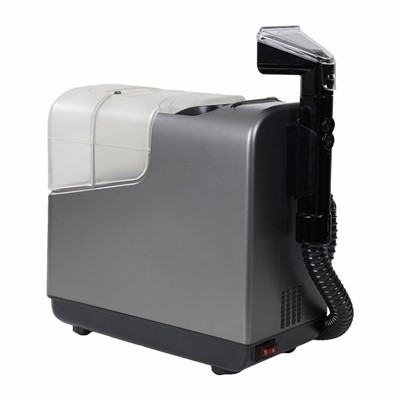
If you’re a homeowner or business owner looking for a machine that actually balances cleaning power and low energy use, hit me up. No pressure, just a chat about what you need. Whether you’re cleaning a 2-bed apartment or a 10,000 sq ft office, I can point you toward the models that won’t leave your wallet (or your carpet) worse for wear.
Carpet and Upholstery Cleaner Machine Reference:
Cleaning Equipment Trade Association. (2022). Energy Efficiency Standards for Mobile Carpet and Upholstery Cleaning Equipment. CETA Industry Report.
U.S. Environmental Protection Agency. (2023). Energy Star Program Requirements for Residential Carpet Cleaners. EPA Energy Star Specification.
International Sanitation Supply Association. (2021). Commercial Carpet Cleaner Efficiency Metrics: Total Energy per Square Foot. ISSA Technical Bulletin.
Ningbo MLE Electrical Appliance Co., Ltd.
Ningbo MLE Electrical Appliance Co., Ltd. is one of the most reliable carpet and upholstery cleaner machine manufacturers and suppliers in China, also supports customized service. Welcome to buy advanced carpet and upholstery cleaner machine made in China here and get pricelist from our factory. Quality products and reasonable price are available.
Address: 921 Room, Jinsejiangnan Building, Zhonghe Street, Yinzhou District, Ningbo, Zhejiang, China.
E-mail: Eileen@nbmle.cn
WebSite: https://www.cleaningappliance.com/
