Alright, let’s get real about chain lube—because let’s be honest, if you’re a driving chain supplier, you know how many times someone calls us panicking because their chains are slipping, rusting out, or just not performing like they should. I’m Jake, been selling driving chains for 7 years now, and the number one question I get isn’t “what chain works best?” It’s “what lube do I actually need for this thing?” Let’s cut through the noise here—no fancy marketing jargon, just what works, what doesn’t, and why it matters for your chain’s lifespan. Driving Chain

First off, let’s stop with the one-size-fits-all myth. I’ve seen guys dump generic motor oil on their agricultural chains in the field, and I’ve seen another guy use dry lube on a factory conveyor chain that runs 24/7 in a humid warehouse. Both thought they were doing the right thing, and both were left with a chain that seized up 3 months early. Here’s the thing: driving chains (that’s the ones that pull loaders, move assembly lines, power forklifts—you know, the workhorses) aren’t bike chains. They’re built for torque, heavy loads, and whatever environment you stick ‘em in. So your lube choice has to match that environment and use case, period.
Let’s break down the main types out there, plain and simple, no confusing names. First, there’s wet lube. This is the thick, sticky stuff—usually petroleum-based, sometimes with additives for pressure (that’s extreme pressure, or EP, additives, which are non-negotiable for heavy loads). I use wet lube for chains that work outdoors, get splashed with water, or are under constant stress—like construction equipment chains, farm chains for tractors or combines. Why? It doesn’t wash off easy. I’ve had a customer run a chain on a log loader for 6 months with a single application of wet lube, and it still wasn’t rusted or binding. The catch? Wet lube attracts dirt, dust, and grime like crazy. If you use it on a conveyor in a wood shop, you’ll get a gunk buildup that acts like sandpaper between the chain pins and rollers. That wears out the chain faster than no lube at all. Trust me, I’ve replaced 10 chains because guys picked the wrong lube here.
Then there’s dry lube. Wait, no—not the bike-specific dry lube that’s super thin. I’m talking about the industrial dry lubricants, usually based on graphite or PTFE (Teflon, for the uninitiated). These are thin, leave a dry film once the solvent evaporates, and they don’t attract dirt. This is your go-to for clean environments—assembly lines in electronics factories, food processing conveyors (wait, food-safe dry lube is a whole separate thing, we’ll get to that), packaging lines where you can’t have gunk getting on products. I recommended dry lube to a customer who makes phone cases—their conveyor was getting dust under the casings, and switching to dry lube fixed that issue right away. But the downside? Dry lube isn’t water-resistant at all. If that conveyor chain is outside and gets rained on, the dry film washes off, and you’re back to metal-on-metal friction. Seized chain, no work. I’ve also seen it fail under really heavy loads—graphite doesn’t hold up to 10,000 lbs of torque like wet EP lube does. That’s a big mistake guys make: thinking dry lube is universal for “clean” use, but if your chain is pulling heavy stuff, it’s useless.
Next up, semi-synthetic lube. This is the middle ground, and it’s actually the best sweet spot for most driving chains I sell. It’s a mix of petroleum base and synthetic additives, so it has better water resistance than dry lube, less gunk buildup than pure wet lube. I use semi-synthetic for chains that run in moderate environments—like warehouse forklift chains, small conveyor systems in non-humid factories, even drive chains for utility trucks. It doesn’t wash off when it drizzles, and it doesn’t cake with dust because it’s not as thick as the wet stuff. A customer who runs a fleet of forklifts in a dry warehouse switched from wet lube to semi-synthetic, and his chain lifespan went from 8 months to 14 months. That’s huge—less downtime, fewer replacements, more money in his pocket. The only time semi-synthetic isn’t the best? If you’re in super heavy load or super dirty, or you’re dealing with food-grade stuff.
Oh right, food-grade lube. That’s a whole separate category if your chain is in food, beverage, or pharmaceutical facilities. Regular lubes have petroleum products that can contaminate food if they drip off the chain. Food-grade lube is certified by the FDA (or local food safety boards) to be safe for incidental contact—like if a drop falls on a cookie, it won’t make people sick. And you can’t use wet lube here, because even if it’s food-grade wet lube, it’ll attract food particles (flour, sugar, whatever) and turn into a sticky mess. For food processing chains, I recommend a food-grade semi-synthetic or a specialized synthetic food lube—something that’s water-resistant, doesn’t attract debris, and is safe. I had a bakery customer whose conveyor chain was getting flour caked on, ruining their product, and switching to food-grade dry lube (modified for safety) fixed that right away. They haven’t had a product rejection from chain gunk in 2 years.
Wait, let’s talk about what not to use. I get it, you might have a can of motor oil lying around. Don’t use it on your driving chain. Motor oil isn’t formulated for the constant, high-torque movement of a driving chain. It’s too thin, so it burns off or washes off fast, and it doesn’t have the EP additives to protect against metal wear. I’ve seen guys use motor oil on a farm chain, and after a month, the chain stretched so bad it jumped off the sprocket. Had to replace the whole chain for them—cost way more than buying the right lube would have. Also, don’t use grease unless you know exactly what you’re doing. Grease is thicker than wet lube, and it can trap heat and dirt. Some chains need grease, but most driving chains are designed for liquid lube that can penetrate between the pins and rollers, not just sit on the outside.
Now, let’s tie this back to what makes sense for you, since you’re here talking about driving chains. If you’re a construction worker, farmer, or anyone with a chain that’s outside, heavy loads, gets wet, use wet EP lube. If you’re in a clean factory, food processing, or electronics, use dry or food-grade semi-synthetic. If you’re in a warehouse or moderate use, semi-synthetic is your best bet. But wait—there’s a right way to apply it, too. I can’t tell you how many guys just spray lube on the outside of the chain and call it good. The lube has to get between the pins and rollers, where the friction actually happens. The best way? Spray lube on the lower part of the chain as it’s moving—so the chain wraps around the sprocket, and the lube gets pulled into the gaps. Wipe off excess after 10 minutes, so it doesn’t attract dirt. That extra 30 seconds of work will double your chain’s lifespan, easy.
Here’s the thing: as a driving chain supplier, I don’t want you buying a chain that dies in 6 months. I want your chain to last 2 years, so you keep coming back. That’s why I give this lube advice for free—because it saves you money, and it makes my chain work better. If you’re not sure what lube is right for your specific chain—like if you have a custom chain for a niche application—hit us up. We can talk through your setup, your environment, what you’re pulling, and point you to the exact lube that’ll work. No sales pitch, just real advice. We’ve been in this long enough to know that the right lube is just as important as the right chain. Stop wasting money on bad lube, and start making your chains last.
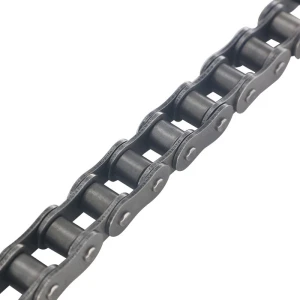
If you’re ready to get the right lube for your driving chain, or you need a new chain that’s built to handle whatever lube you pick, just reach out. We’ll walk you through everything—no confusing questions, no hidden fees, just straight up help.
Driving Chain References:
- American Society of Mechanical Engineers (ASME). (2020). tribology of chain drives: guidelines for industrial applications.
- National Lubricating Grease Institute (NLGI). (2021). Industrial Lubricants for Power Transmission Chains: Selection and Application.
- USDA Food Safety and Inspection Service (FSIS). (2022). Food-Grade Lubricants for Food Processing Equipment.
- International Organization for Standardization (ISO). (2019). ISO 12120: Chains and sprockets for conveyors and power transmission – Selection and use of lubricants.
Hangzhou Dongteng Industrial Co., Ltd.
As one of the most professional driving chain manufacturers and suppliers in China, we have world-leading production equipment and strong manufacturing capabilities. Please feel free to wholesale high quality driving chain made in China here from our factory. Also, custom service is available.
Address: Jingdong Village, Jingjiang Town, Xiaoshan District, Hangzhou City
E-mail: cocowu@dtc-chain.com
WebSite: https://www.dtc-chains.com/
