If you’ve ever browsed industrial supply catalogs or reached out for a quote on hex nuts, odds are you’ve asked that same question: “What’s the minimum order quantity (MOQ)?” As a hex nut supplier who’s spent 12 years working directly with maintenance teams, manufacturing line leads, small fabrication shops, and even hobbyist makers, I can tell you there’s no one-size-fits-all answer. MOQs aren’t arbitrary numbers—they’re rooted in manufacturing costs, logistics, material waste, and customer needs, and the best suppliers balance all of that without making you pay for more than you need. Hex Nuts
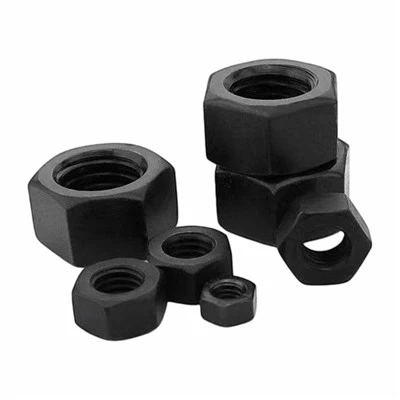
Let’s break this down, starting with the biggest factors that shape MOQs for hex nuts. First, material grade matters more than most people realize. Hex nuts come in plain carbon steel (the workhorse for general construction and machinery), stainless steel (for food processing, marine, or medical environments where corrosion is a risk), brass (for plumbing and electrical applications), and specialty alloys like titanium or Inconel for aerospace or high-temperature industrial use. Each has very different processing requirements, which directly impact how much we can (or have to) charge per unit and, thus, how low we can set an MOQ.
Take plain carbon steel hex nuts, for example. These are the most common, made from low-carbon steel wire that’s cold-headed into shape, threaded, and often plated with zinc or galvanized to prevent rust. The manufacturing process is highly automated, runs in large batches, and has very low per-unit production costs. Back when I started, we used to see MOQs for standard ¼”-20 zinc-plated carbon steel hex nuts as high as 50,000 pieces—because making a smaller batch would mean restarting the entire production line, which wastes raw material (steel wire) and labor, and drives up the per-piece cost so much that even small buyers couldn’t justify it. But over the last decade, as automation has gotten more flexible, that MOQ has dropped dramatically. Today, for standard, off-the-shelf carbon steel hex nuts (the ones we keep in stock year-round for common sizes: ¼” up to 1”, coarse thread, zinc or plain finish), our MOQ is just 1,000 pieces. For smaller sizes, like #6-32 (common in electronics or small appliances), we keep stock at 500 pieces, since those are lighter, require less wire, and can be packed more efficiently.
Stainless steel hex nuts, though, are a different story. 304 and 316 stainless are the go-to grades for corrosion resistance, but they’re more expensive than carbon steel, and their manufacturing has higher tolerances. If you’re making a stainless steel hex nut, you can’t just use the same cold-heading line as carbon steel—you need special tooling to avoid galling (the scratchy, distorted thread that happens when two stainless steel parts rub) and ensure the finish is smooth enough for applications like food equipment or marine rigging. For standard stainless steel hex nuts, our MOQ is 500 pieces for common sizes. But if you need a specialty grade, like 316L stainless for medical devices or 18-8 stainless with a passivated finish for aerospace, that MOQ jumps to 200 pieces. Why? Because specialty alloys have higher material costs, smaller production runs, and more strict quality testing to meet industry standards like ISO 9001 or ASTM A194. If we make a smaller batch, each unit costs twice as much as a standard stainless nut, so we have to set a higher MOQ to avoid losing money on the order.
Then there’s size and thread type. Hex nuts aren’t just one size—we have SAE standard sizes, metric sizes (common in European and Asian manufacturing), fine thread, coarse thread, and even custom thread pitches for specialized equipment. The bigger the nut, the more material it uses, and the more labor goes into processing it. A 2” heavy hex nut (used in large construction cranes or bridge beams) is way bigger than a ¼” nut, so each piece takes more steel wire, more time to thread, and more space to package and ship. For a 2” standard carbon steel hex nut, our MOQ is 100 pieces, versus 1,000 for a ¼” nut. Custom thread pitches are another factor: if you need a nut for a rare bolt size that’s not in our standard inventory, we have to set up new tooling, which adds cost. For custom hex nuts with unique thread sizes or finishes, our MOQ is usually 50 pieces, because the tooling cost has to be spread over fewer units.
But wait—MOQs don’t just depend on the product, they depend on the customer too. That’s one thing a lot of first-time buyers don’t realize: reputable suppliers aren’t just selling you nuts, they’re working with your needs. A small fabrication shop that’s building a custom shelving unit for a local café and needs 200 ½” zinc hex nuts shouldn’t have to buy 1,000, even if that’s our standard MOQ for that size. A hobbyist working on a home workshop project? We’ve got you covered, too. Over the years, we’ve developed flexible policies for small, one-off orders because we know not every customer needs thousands of pieces. We’ve also built a robust inventory system that lets us split batches for repeat customers. For example, a regular customer who buys 10,000 ¾” carbon steel nuts every quarter might order 2,500 pieces to cover a small upcoming job, and we can pull that from their pre-reserved stock without charging them extra, no MOQ hoops to jump through.
Another big influence on MOQs is whether the nuts are stock or custom. If you’re buying off-the-shelf hex nuts that a supplier keeps in a warehouse, ready to ship immediately, MOQs are lower because the supplier already has inventory on hand. Custom hex nuts—like a nut with a special coating, a precision machined flange, or a unique material for a one-of-a-kind project—require new production runs, so MOQs are higher. For example, if you need hex nuts coated with a non-standard paint for outdoor playground equipment, the manufacturer has to run the plating line specifically for your order, which has minimum batch sizes. Those minimums are non-negotiable, because the setup time and material waste would make a tiny order not worth the effort. That said, good suppliers will be upfront about that upfront, so you don’t get a surprise quote with hidden fees later.
Now, let’s talk about what MOQs mean for you, the buyer. If you’re a large manufacturing company that needs 100,000 hex nuts a month for an assembly line, a higher MOQ might actually work in your favor. Suppliers will often offer tiered pricing, so the more you buy at once, the lower the per-piece cost. A 1,000-piece order of standard ½” carbon steel nuts might cost $0.12 each, while a 10,000-piece order could be $0.09 each, and a 50,000-piece order might be $0.07 each. That adds up to big savings for bulk buyers. But if you’re a small business or a one-off project, paying for more nuts than you need ties up your cash and takes up storage space, which is why flexible MOQs are so important.
Over the years, I’ve heard plenty of customers say, “MOQs are just a way for suppliers to make you buy more.” That’s not true. MOQs exist for valid, practical reasons. Let’s do a quick cost breakdown to prove it. For a standard ¼”-20 zinc-plated carbon steel hex nut, the raw material (steel wire) costs about $0.02 per nut. The cold-heading, threading, plating, and packaging adds another $0.05 per nut, for a total per-unit cost of $0.07. If we make 1,000 nuts for an order, that’s $700 in production costs, plus $50 in labor and overhead, for a total of $750. We sell them at $0.12 each, so that’s $120 in profit, which covers the costs of keeping inventory, shipping, and customer service. But if we make only 100 nuts for that same order, the setup time for the line is the same as for 1,000 nuts. So we’d still have $50 in labor and overhead, plus $2 in material costs, for a total of $57. If we sold them at our regular $0.12 per piece, that would be $12 in revenue, which would mean a $45 loss. So we can’t sell 100 at the same per-piece price, which is why small orders have slightly higher per-unit costs or adjusted MOQs. It’s not about being greedy—it’s about keeping the business running so we can serve everyone, not just the bulk buyers.
Of course, there are exceptions to every rule. Some suppliers will advertise artificially low MOQs, but they’re often cutting corners on quality. I’ve seen suppliers offer MOQs of 100 standard hex nuts, only to find that the threads are misaligned, the plating is already chipped, or the nuts crack under light pressure. That’s because they’re using cheap, low-grade material or cutting corners on quality control to keep per-unit costs low. As a supplier, we’d never do that. We prioritize quality first, so our MOQs are set to cover the cost of making a nut that meets industry standards, with no defects.
So how do you navigate MOQs as a buyer? First, be upfront about your needs. If you only need 200 nuts for a small project, tell your supplier. Good ones will work with you, whether that means adjusting the MOQ, splitting a bulk batch they already have, or directing you to a supplier that specializes in smaller orders (though as I said, many flexible suppliers can accommodate that). Second, clarify if you need standard stock or custom nuts. If you need something custom, ask early—custom orders take longer, and MOQs are higher, so planning ahead saves everyone time and frustration. Third, ask about tiered pricing. If you anticipate needing more nuts down the line, a slightly higher MOQ now that saves you money per piece is often worth it, as long as you have storage space.
At the end of the day, the MOQ for hex nuts is not a random number—it’s a balance between what a supplier needs to stay in business and what a customer needs to get the right parts for their project. As someone who’s been in this industry for more than a decade, I’d rather have a long-term customer who needs consistent, fair terms than one who’s frustrated by an arbitrary MOQ.

If you’re looking for hex nuts, whether you need 200 for a small job or 50,000 for a manufacturing line, we can help. We keep a full inventory of standard off-the-shelf hex nuts in all common sizes, materials, and finishes, with flexible MOQs for most orders. We also handle custom hex nuts for specialized applications, with transparent lead times and pricing. If you have questions about MOQs for your specific project, or want a quote, reach out to our team to discuss your needs. We’re happy to work with you to find a solution that fits your budget and timeline.
Hex Nuts References
ASTM International. (2020). Standard Specification for Carbon Steel Bolts, Studs, Threaded Rods, and Nuts for Pressure Vessels and Other Pressure Equipment. ASTM A194/A194M-20.
ISO. (2018). Fasteners – Bolts, Screws and Nuts for General Mechanical Engineering – Metric Series. ISO 898-1:2018.
National Association of Architectural Metal Manufacturers. (2021). Recommended Practices for Hot-Dip Galvanizing of Steel Fasteners. NAAMM FP 510-21.
Handan Jihao Fastener Co., Ltd.
We’re known as one of the most professional hex nuts manufacturers and suppliers in China. With abundant experience, we warmly welcome you to wholesale customized hex nuts made in China here from our factory. If you have any enquiry about cooperation, please feel free to email us.
Address: A2, Row 31, Feiyu Screw World, Hebei Pu, Linmengguan Town, Yongnian District, Handan City, Hebei Province
E-mail: wenzhaona0@gmail.com
WebSite: https://www.chinaboltnut.com/
