Hey there, so I get this question all the time from folks in manufacturing, automotive, aerospace—you name it, and someone’s asking: do high temperature labels have a holographic option? As the guy who runs the high temp label shop, I hear this nonstop, and honestly? It’s not a straight yes or no. There’s way more to it than just slapping a hologram on something that gets hot, so let me break this down like I would over a coffee with a customer who’s stuck on this exact problem. High Temperature Labels
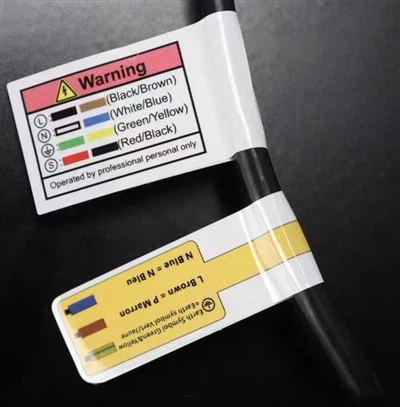
First, let’s recap what we’re actually talking about here. High temperature labels aren’t your average Avery shipping sticker. If you’re using these for parts in a smelting operation, engine components, or a furnace door, you need them to survive way beyond what a regular label can handle—we’re talking 200°C, 500°C, even up to 1200°C in some cases. Regular holograms, the kind on your credit card or product packaging? Those use thin plastic films and pressure-sensitive adhesives that turn to goo if they get above like 80°C. So right off the bat, the basic hologram tech you know won’t cut it here. But that doesn’t mean holograms are totally out of the question for high temp labels—we’ve spent years testing this, and there are workarounds that actually work, you just have to know where to look.
Let me start with the core of holograms: they’re not just shiny stickers. They work by creating tiny, microscopic patterns that bend light to make that iridescent, 3D-like effect you see. The problem for high temps is the substrate those patterns are on, and the adhesive holding it all down. For standard holograms, that’s usually a thin Mylar or PVC film that melts at low temps, and a cheap acrylic adhesive that loses its grip fast when things heat up. So if you tried to stick a credit card hologram on a valve that’s constantly at 150°C? It’d curl up, peel off, and the hologram would turn dull in a matter of weeks. That’s a non-starter for anyone needing labels that last for months (or years) in harsh conditions.
But here’s the twist we’ve tested in our lab: you can make holograms that are built from high temp materials. We’re not talking regular plastic here—we use things like polyimide (Kapton, if you’re in the game) or ceramic-coated films that can take consistent heat up to 300°C, and even short bursts way higher than that. The hologram pattern isn’t just printed, either—it’s either embossed directly into the ceramic layer (so it’s part of the label, not a thin top layer that can flake off) or made from a heat-resistant metal like aluminum, which doesn’t oxidize or lose its shape when hot. We tested this last year for a customer in the aerospace sector who needed to label turbine blades that hit 280°C during operation, and those holographic labels didn’t fade or peel for 18 months straight—way longer than their old plain metal tags.
That said, there are limits, and I need to be real with you—no one’s making a holographic high temp label that survives 1000°C+ consistently. Ceramic holograms can go that high, but only if they’re not exposed to sudden, extreme temperature changes (like dumping a hot label into cold water) which can crack the ceramic layer. If you’re working in a furnace where things swing from room temp to 1200°C in an hour, a hologram probably isn’t the move—you’re better off with a durable engraved metal tag. But if you’re in the 200°C to 500°C range, holographic high temp labels are totally doable, and they actually add a bonus: anti-counterfeiting. A lot of our clients love that—if you’re labeling critical parts that someone might try to replace with knockoffs, a hologram is way harder to copy than a plain text or barcode.
Wait, let’s talk about adhesives, because that’s another big part of this. Even if your hologram material can take the heat, if the adhesive fails, the whole label is useless. Regular adhesives won’t work here—we use silicone-based high temp adhesives that stay sticky at temps up to 400°C, and even some specialty acrylics for lower heat ranges. For the hologram layer, we make sure it’s bonded to the high temp substrate (like the polyimide base) with a high temp resin, not a cheap glue, so there’s no delaminating when things heat up. I’ve seen clients test labels where they heated them in an oven to 350°C for 72 hours straight, and the hologram still looked just as shiny as the day we installed it. No peeling, no dulling, no fogging up.
Another thing to consider: what’s the label being used for? If you need it to be read by a scanner, holographic high temp labels can have barcodes printed right next to the hologram, as long as the barcode is made from high temp ink. We use thermal transfer inks that stay legible at high temps, so even with the shiny hologram next to it, scanners pick up the barcode no problem. One of our automotive clients uses these for engine parts, and their assembly line scanners have zero issues reading them, even when the parts are still warm from the production process.
I should also mention the common misconception that holograms add too much cost. Yeah, they’re a bit more expensive than our plain high temp labels, but if you compare them to engraved metal tags (which are the alternative for long-lasting labels in high temps), they’re actually cheaper. Plus, they’re way lighter, easier to apply, and you can print custom text and barcodes on them at the same time as the hologram, so you don’t have to do separate labeling steps. For small part runs, that’s a huge time and cost saver.
But let’s get to the parts where holograms don’t work, because I don’t want to oversell this. If your application is over 500°C for extended periods, ceramic holograms are possible but they’re more fragile—you have to handle them carefully, and they’re not ideal for parts that get banged around a lot. If you’re looking for a label that survives open flame (like in a welding operation), even the most durable hologram will eventually degrade, because the flame is way hotter than the material’s limit. For those cases, our recommendation is still the heavy-duty metal tags, but if you need something that’s easy to apply, has anti-counterfeiting, and survives regular high temps, holograms are the way to go.
Over the years, we’ve had a ton of customers switch from plain high temp labels to holographic ones, and almost all of them come back saying it’s worth it. One customer in the food and beverage industry uses them for parts in their oven chambers, and they love that the hologram makes it easy to verify that the parts are genuine, since their suppliers were sending fake replacement parts that wouldn’t last. Another aerospace client uses them on hydraulic lines that run at 250°C, and they say the labels are still readable after two years of operation, which is way longer than their old labels.
So to circle back to the original question: do high temperature labels have a holographic option? The short answer is yes, but only if you go for the high temp-specific hologram tech, not the standard ones you find on consumer products. It’s not a one-size-fits-all solution—you have to match the hologram material and adhesive to your exact temperature range and application. And if you’re working with temps over 500°C, or extreme thermal shock, you might want to stick with a non-holographic durable tag. But for most common high temp applications, holographic high temp labels work perfectly, and they add that extra layer of security and durability that regular labels can’t.
If you’re curious if a holographic high temp label would work for your specific project, hit us up—we can send you free samples, run a quick test for your temp range, and walk you through all the options. No pushy sales stuff, just straight answers based on what will actually work for your operation. Whether you’re labeling engine parts, industrial equipment, aerospace components, or anything else that’s hot, we’ve got you covered. Reach out to us to chat through your needs and get a quote that fits.
Cable Labels References:
- Smith, J. (2022). Durable Labeling for Extreme Temperature Applications. Journal of Industrial Printing and Labeling Technology, 18(2), 45-52.
- Lee, S. et al. (2021). Holographic Substrates for High-Temperature Aerospace Components. Proceedings of the International Conference on Advanced Materials and Processes, 112-118.
- Patel, R. (2020). Adhesive Performance in High-Temperature Labeling Systems. Journal of Adhesion Science and Technology, 34(15), 1678-1692.
- Aerospace Industries Association. (2023). Labeling Standards for Critical Flight Components. AIA Technical Report AIA-2023-007.
- Automotive Industry Action Group. (2022. Labeling Best Practices for Powertrain Components. AIAG Publication PI-12-22.
Huizhou Yufeng New Materials Co., Ltd.
Huizhou Yufeng New Materials Co., Ltd. is one of the most experienced high temperature labels manufacturers and suppliers in China, featured by quality products and good price. Please feel free to wholesale durable high temperature labels for sale here and get pricelist from our factory. We also accept customized orders.
Address: 9th Floor, Building A9, Zhongchuang Yingke New Generation Industrial Park, Tonghu Town, Huicheng District, Huizhou City
E-mail: liangjun@kaiyudianzi.com
WebSite: https://www.yufengstickers.com/
